
SWAG-DSS Securing Water in Agriculture Decision Support System
A spatial decision support system for agricultural water resilience
Empowering water resource professionals with spatial analytics to assess irrigation sufficiency, evaluate water reallocation opportunities, and identify storage potential to achieve optimal irrigation with minimal reliance on external water sources.
Too much water
41% of irrigated water use is above crop water requirement.
Too little water
42% of global croplands experience water scarcity for at least five months a year.
Bridging the gap
3 management approaches to bridge agricultural water surplus and deficits locally.
Three Approaches to Closing the Agricultural Water Gap
Three approaches explore how far water needs can be met through redistribution alone, storage alone, or a combination of both.
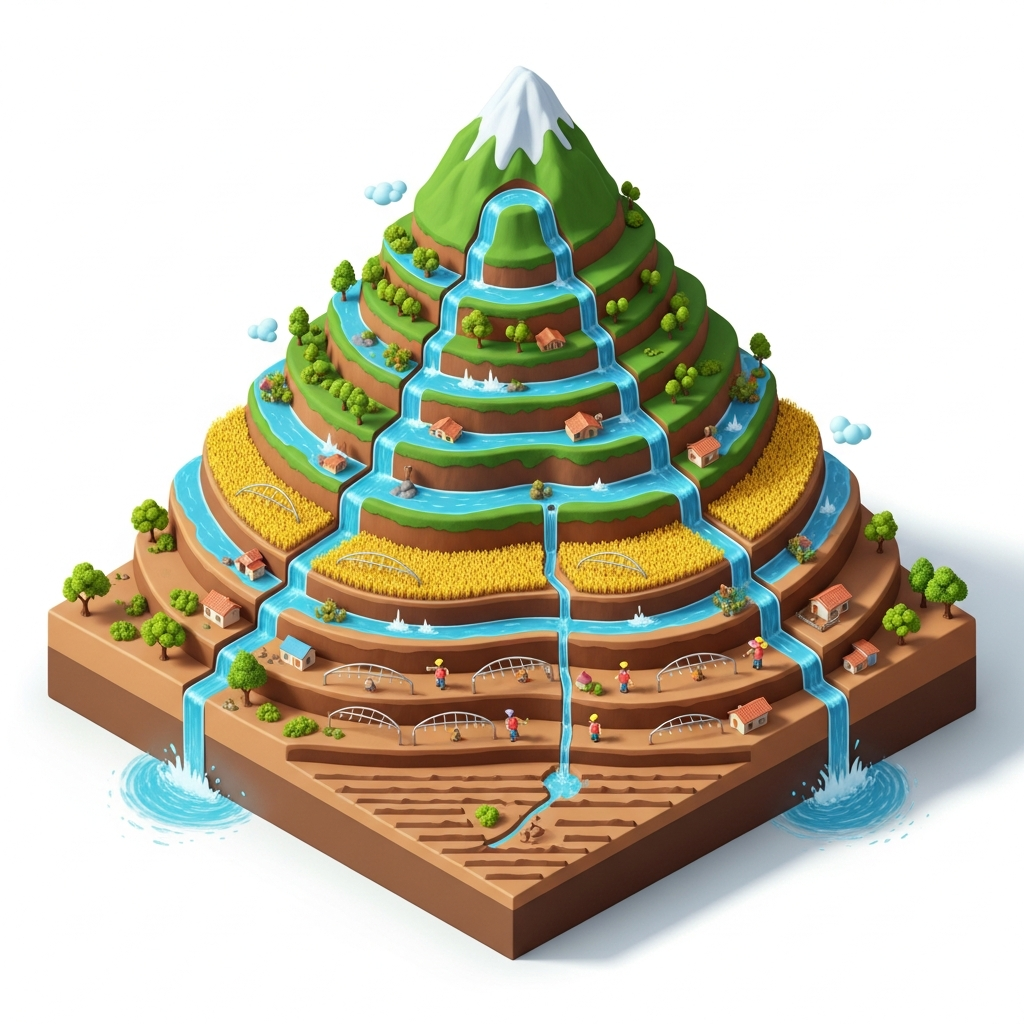
Reallocation only
Redistributing surplus water to nearby downstream areas with deficits by gravity. No infrastructure required.
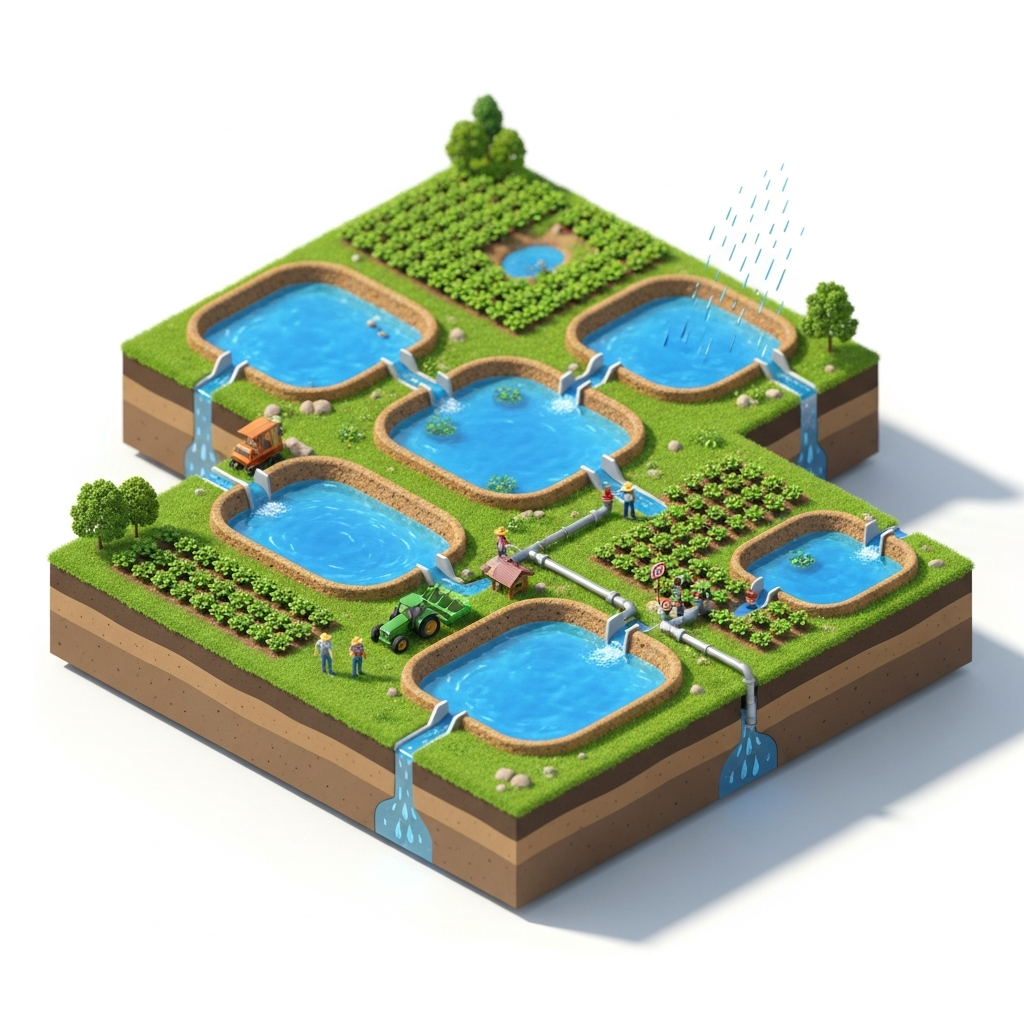
Storage only
Small ponds capture runoff during wet months for use in dry periods.
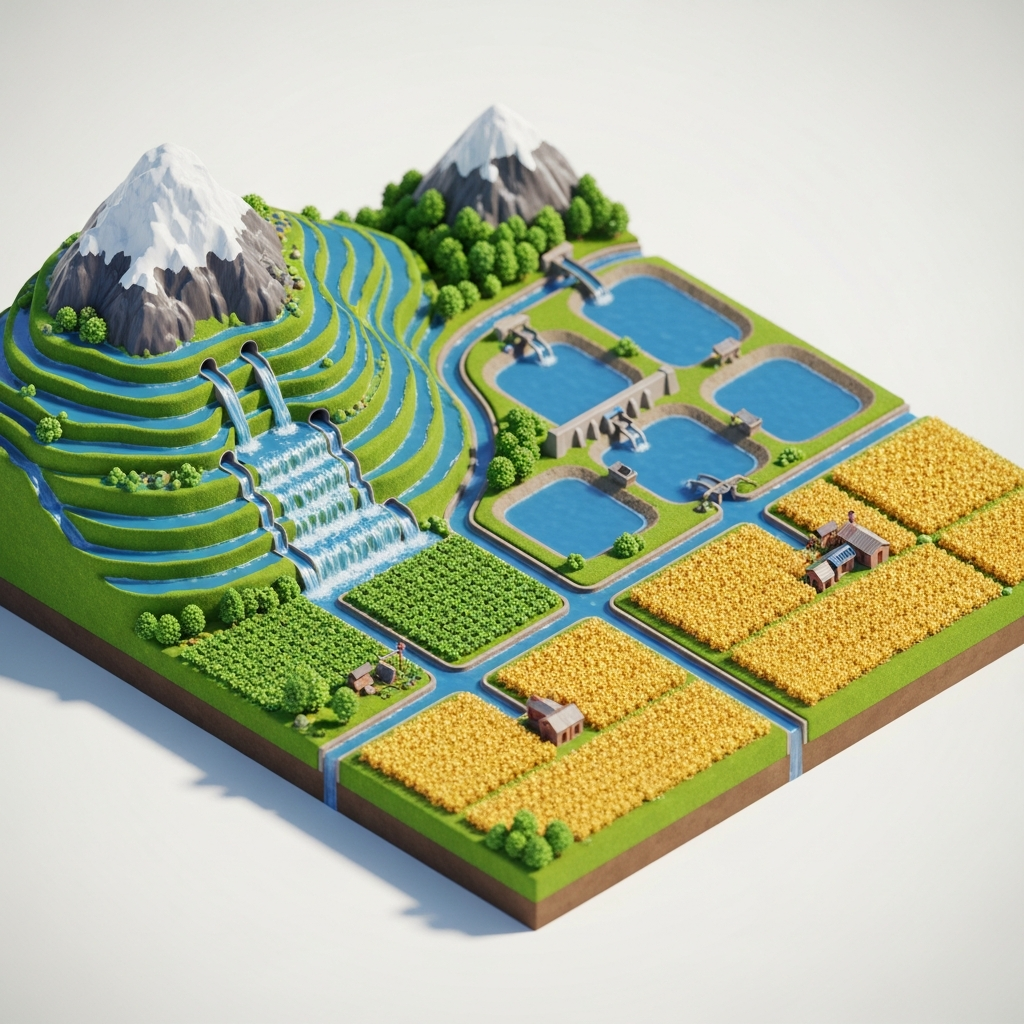
Reallocation + Storage
First redistributes available surplus water locally. If deficits remain, use small ponds to meet unmet deficit.
Institutional Partners